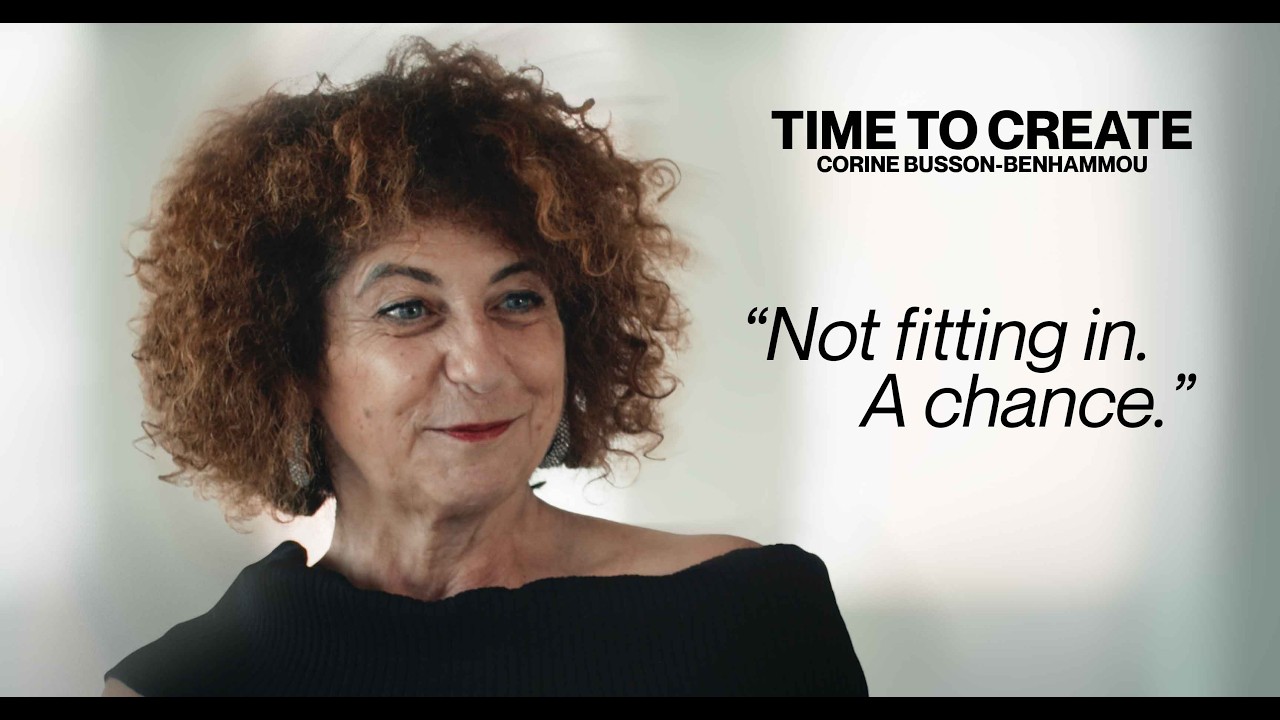
A founder story video is a short film built around the person who started the company, not around the product. It works because investors, customers and candidates all run the same silent check before committing: is this person credible, and does this business exist for a real reason. The films that work are built on one turning point, told in the founder's own words, with no script read to camera and no résumé narration. Budget in the US market runs from 12 000 dollars for our Time to Create founder film format. Studio FLF, based in Angers, Paris and Miami, produces these films as a director-led documentary, not a corporate interview.
Most companies build their founder film in the wrong order. They start from the milestones, the funding rounds, the headcount, the awards, then wonder why the result feels like a LinkedIn profile read out loud. The films that actually move people are built the other way around: from the moment the founder almost stopped, or the moment they understood something everyone else had missed. That is the only part of the story an audience cannot get anywhere else.
Why does a founder story convince investors faster than a deck?
An investor evaluating an early or growth stage company is running two assessments at once. The first is the numbers, and the deck handles it well. The second is the one nobody writes down: does this person keep going when it gets hard, and would I want to be in a board meeting with them for the next seven years. No spreadsheet answers that.
A founder film answers it in four minutes, before the first call. That matters because most funds now screen far more companies than they meet. By the time a partner takes a meeting, they have already formed an opinion from whatever material was available. If the only available material is a deck, they are judging your formatting. If a film exists, they are judging you, which is what you want. Our guide to films that support a raise covers the fundraising sequence in detail.
Why do customers and candidates need the same film?
This is the part most companies miss. The founder film is usually commissioned for a raise, then quietly turns out to be the highest performing asset the company owns, because three very different audiences are asking the same underlying question.
- Enterprise customers buying from a smaller company are taking a career risk. They need to believe the company will still exist in three years, and the founder is the evidence.
- Candidates comparing two offers choose the one where they understood why the work matters. Salary closes the gap, conviction closes the candidate.
- Partners and distributors commit their own reputation when they carry your name. They want to know who they are standing next to.
- The internal team uses it more than anyone expects. A company that grows past forty people loses the origin story, and the film becomes the only version everyone has heard the same way.
That multiplicity is what makes the economics work. A film built for one audience is a marketing expense. A film that serves fundraising, sales, hiring and onboarding for three years is infrastructure. The same logic we apply to corporate video ROI applies here, with a much longer useful life.
Nobody remembers the market size slide. They remember the moment the founder said the thing they were not supposed to say out loud.
What makes a founder film work, and what kills it?
The difference between a founder film that gets forwarded and one that gets skipped is almost never the camera. It is the writing decision made before anyone shoots anything.
| What works | Why | What kills it |
|---|---|---|
| One turning point | A single decisive moment gives the film a spine and makes it memorable | A chronological career summary from school to today |
| The founder's own words | Unscripted speech carries conviction that written lines never reproduce | A teleprompter script read to camera |
| An admitted difficulty | Vulnerability is the fastest credibility signal available to a founder | Wall to wall success with no obstacle |
| Real environments | The workshop, the factory floor, the city at 6am, wherever the work happens | A white studio backdrop that could be any company |
| Silence and pacing | Room to think reads as confidence on screen | Music under every second and cuts every 1.5 seconds |
One more rule, learned the hard way: the film must be allowed to say something specific enough to be disagreed with. A founder film that every founder in the industry could have delivered word for word has failed, no matter how well it is shot.
How much does a founder story video cost in the US?
Our founder film format, Time to Create, starts at 12 000 dollars. That figure covers a director-led production, not a crew showing up with a camera. Here is what it actually includes and what moves the number.
- Preparation interviews before any filming, to find the turning point. This is the phase that decides whether the film is worth making, and it cannot be skipped.
- One to two shooting days, usually across two or three real locations that mean something to the story.
- Documentary interview conducted by the director, off camera, in conversation rather than in questions and answers.
- Writing in the edit, which is where the film is genuinely built, from several hours of material down to six to ten minutes.
- A short version for social and for the top of a deck, cut from the same material.
What pushes the budget above the entry point: travel between cities, archive research and licensing, original music, multilingual subtitle sets, and a second protagonist such as a co-founder. What lowers it: a single location, and shooting when the founder is already in one place for another reason. You can scope your own case with our project estimator and then talk it through with our production team.
When is the right moment to make one?
Timing matters more for this format than for any other, because a founder film captures a company at a specific altitude and cannot be backdated.
- Six to eight weeks before a raise opens. Early enough to be in the first email, not scrambled together during the process.
- At an inflection point: a pivot that worked, a first international market, a factory that opens, a founder stepping back into an operating role.
- Before a founder transition. The story is far harder to tell once the person who lived it has left the company.
- At a round anniversary, ten or twenty years, when there is enough distance to say what actually happened.
The one moment to avoid is the week the company is in crisis. A founder film requires the founder to be reflective, and reflection is not available during a fire.